Making daycare drop-off easier in the morning
Drop-off is the hardest part of the day for a lot of families — the clinging, the tears, the guilt you carry to work. Most of what helps happens before you leave the house, and one small habit does more than anything: tell your child, in the morning, exactly who is picking them up at the end of the day.
Answer the question underneath the tears
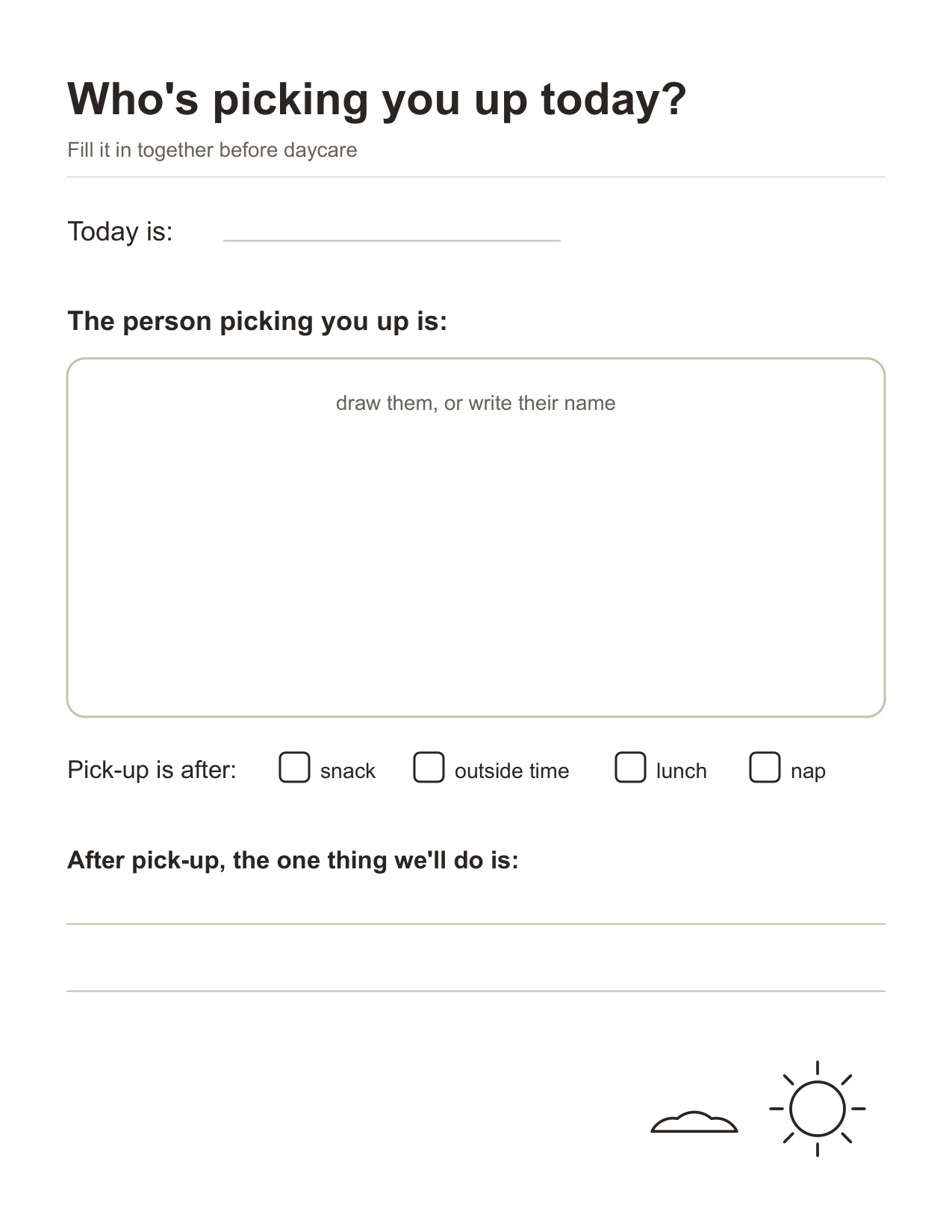
A toddler at drop-off is often asking something they can't put into words: when do I go home, and who with? Answer it before the day starts. “Grandma is picking you up after snack, and then we'll go to the playground.” Naming the person and a rough anchor closes the open loop that a lot of drop-off anxiety hangs on.
Use an anchor, not a clock
A young child can't hold “5 o'clock,” but they can hold “after snack” or “after outside time.” Tie pick-up to a part of their day they'll actually recognise. A simple morning chart you fill in together at breakfast makes it concrete — and gives them something to point to.
Give them one thing to look forward to
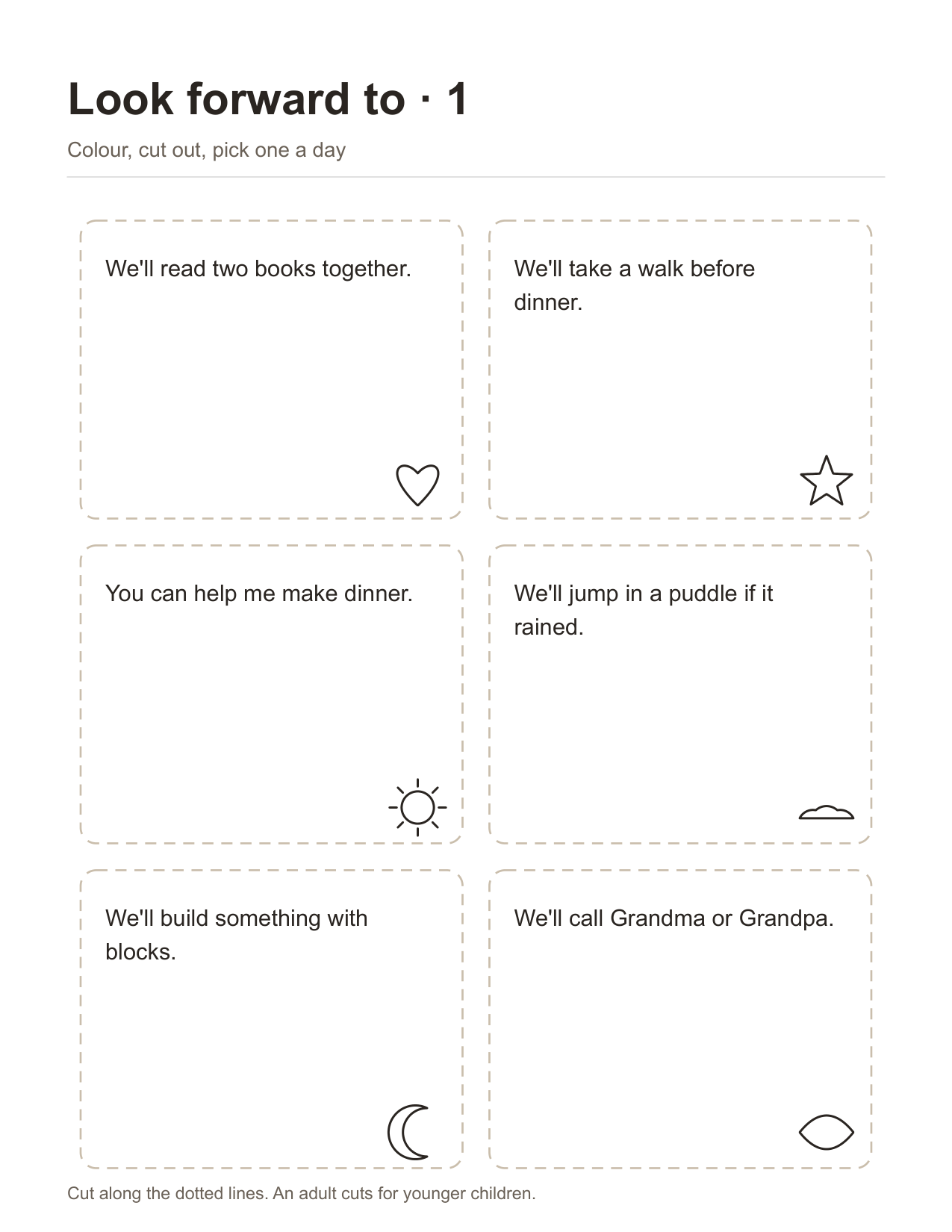
Send them in with a small good thing waiting on the other side — a walk, two books, a puddle to jump in if it rains. It reframes the day from “you're leaving me” to “we'll do this after.”
Keep goodbye short and sure
Drawn out, a goodbye gets harder, not easier. A warm, confident, brief goodbye — a hug, “I'll see you after snack,” and go — tells your child you trust the place and you're coming back. Many parents and providers find a short goodbye is easier on a child than a lingering one.
The printables that help
Free to print for your own family or classroom. No sign-up. US Letter PDF.
Common questions
How do I make daycare drop-off easier for my toddler?
Tell them in the morning who's picking them up and roughly when — tied to an anchor like “after snack,” not a clock. Give them one thing to look forward to after, and keep the goodbye warm, brief and confident. Most of what helps happens before you leave the house.
Should I tell my child who is picking them up?
Yes — naming the person collecting them, at breakfast, answers a question a young child can't ask out loud and often eases drop-off. A morning chart makes it concrete and gives them something to point to.
Is it better to make goodbyes quick at daycare?
Many parents and providers find a warm, confident, short goodbye is easier on a child than a drawn-out one; lingering or coming back tends to prolong the upset. Say when you'll be back — “after snack” — and go.